
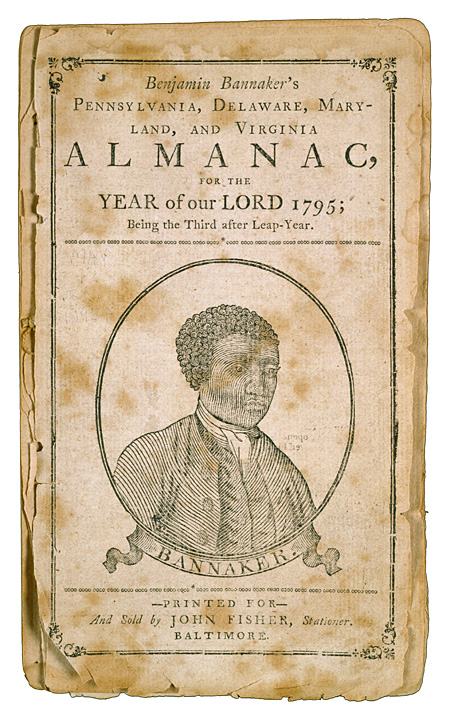
Benjamin Banneker, free man of color, is the first Black scientist

Oella
April 1, 1791

Benjamin Banneker is a free Black man and self taught astronomer and clock maker. The Quaker brothers John, Andrew and Joseph Ellicott give him books on astronomy.

He accompanies the Ellicott party that surveys the boundaries of Washington DC in 1791. The following year he publishes the first of six annual almanacs and writes to Thomas Jefferson, stating that men of color are intellectually equal to white men. Jefferson responds with intellectual respect but no commitment.

Banneker’s interest in astronomy and his scientific abilities make him the first and most accomplished Black person in 18th century America.

For More Information

Benjamin Banneker Historical Park and Museum

View Other Mosaic Pieces

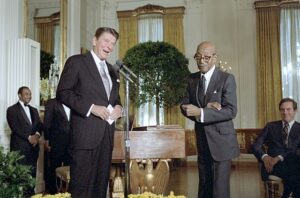
Eubie Blake, musical pioneer in jazz and ragtime

Eubie Blake creates a landmark in the history of Broadway musical theatre in 1921. Blake teams up with Noble Sissle to launch the first All African American Broadway production, Shuffle Along, which runs for 504 performances. President Reagan presents Eubie Blake with a national award.

Read More »

Maryland’s flag, the most popular, has a long history

The General Assembly makes new (old) flag official in 1904. Based on heraldic crests in the George Calvert family it is now the most popular and most recognized state flag. The flag was used by both sides during the Civil War conflict. A full description of the flag’s history is on Maryland Secretary of State’s website.

Read More »

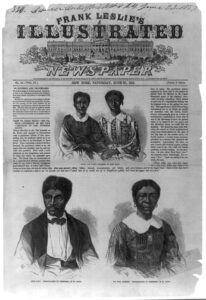
Marylander Roger B. Taney hands down the Dred Scott decision.

Roger Taney, Maryland native and Supreme Court Chief Justice, delivers 7-2 opinion in 1857, in the Dred Scott case, declaring that Blacks in the US are not considered citizens nor entitled to government protection, and that Congress cannot prohibit slavery. The decision becomes a major factor leading to the Civil War.

Read More »

Land Recognition

We acknowledge the enduring presence of many American Indian tribes who once lived in Maryland and who now, having lost their lands, live in a diaspora. Read more.

© 2023 MARYLAND 400

Scroll to Top