

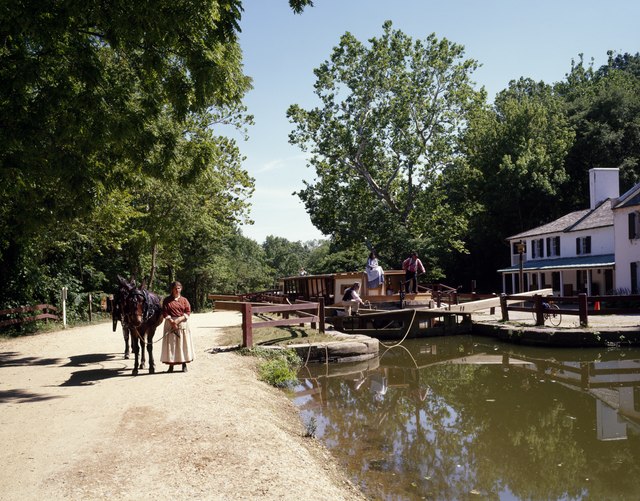
The Chesapeake & Ohio Canal completes construction of Lock 24 and the Seneca Aqueduct, a unique combination among canals of an aqueduct and a lift lock. The canal company begins construction in Georgetown in 1820. By 1830, some 33 miles upstream, the company faces a new unique challenge: how to cross a creek while also raising a boat to the next level. By 1832, working entirely by hand, workers build a stone aqueduct combined with a lift lock. In January of 1834, factions of immigrant workers from various parts of Ireland employed on the canal begin fighting and rioting. Andrew Jackson is the first president to send federal troops to quell the violence. A second engineering achievement is the Paw Paw Tunnel in Allegany County. It stretches over 3000 feet, takes 13 years to build and is completed in 1850. By the Civil War, the C & O Canal weaves its way up the Potomac River Valley 184 miles to Cumberland. Among its 11 aqueducts and 74 locks, Lock 24 is the greatest achievement in the history of American canals. By 1850, the railroads have made canals less efficient in moving goods. The C&O ceases operation in 1924.

Marin Alsop is the first woman appointed to a major American orchestra
Marin Alsop is the first woman appointed to a major American orchestra.