
Ratification Day in Annapolis ends the Revolutionary War

Annapolis
January 14, 1784

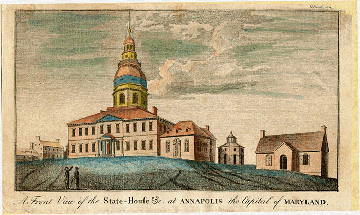
The final chapter of the Revolutionary War occurs in the Maryland Statehouse. After the great 1781 victory at Yorktown, England agrees to negotiate a peace settlement. A patient and skilled American team led by Benjamin Franklin spends two years hammering out a deal with the reluctant British. In September, 1783, the Treaty of Paris ending hostilities is headed for American ratification.

Maryland invites a practically powerless Congress of the Confederation to Annapolis and in November 1783, state delegations begin to show up. Three weeks after George Washington resigns his commission at the Statehouse, Congress meets on January 14, cobbles together a quorum and ratifies the Treaty of Paris, making our new country truly independent. Ratification Day makes Annapolis the first U.S. Capital. 

The Maryland Statehouse is the oldest statehouse in the country in continuous use.

For More Information

Maryland Statehouse Ratification Day

View Other Mosaic Pieces

Marylander Roger B. Taney hands down the Dred Scott decision.

Roger Taney, Maryland native and Supreme Court Chief Justice, delivers 7-2 opinion in 1857, in the Dred Scott case, declaring that Blacks in the US are not considered citizens nor entitled to government protection, and that Congress cannot prohibit slavery. The decision becomes a major factor leading to the Civil War.

Read More »

“Underground railroad” term coined

Thomas Smallwood coins the expression “underground railroad,” in a newspaper column in 1842. Born a slave in PG county he teams up with Charles Torrey (pictured), a white clergyman, to help over 400 slaves escape through DC.

Read More »

Land Recognition

We acknowledge the enduring presence of many American Indian tribes who once lived in Maryland and who now, having lost their lands, live in a diaspora. Read more.

© 2023 MARYLAND 400

Scroll to Top