

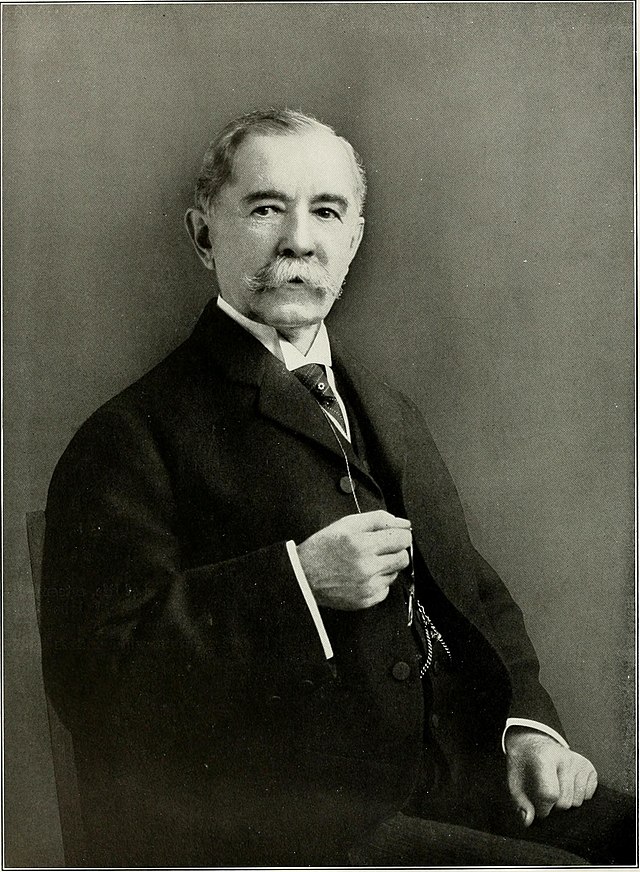
Inventor William Painter (1838-1906) is the first to create a practical method of capping bottled carbonated beverages. He follows that with another invention, a foot-powered crowning device, that seals 24 caps a minute on bottles. Painter soon founds the Crown, Cork and Seal Company in Baltimore. The new inventions make the Crown Seal very popular and, by 1906, the new company has manufacturers in Brazil, France, Germany, Japan and the United Kingdom.
William Painter is born in Montgomery County, Maryland. He moves to Baltimore in 1865 and works for decades to get manufacturers to create a universal neck for bottles. Painter is a born inventor, creating 85 patented devices including a machine to detect counterfeit money. His employee, King Gillette (1855-1932), goes on to invent a popular disposable safety razor blade.
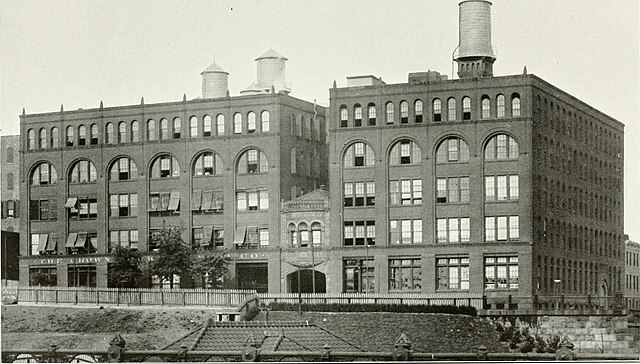
The Crown, Cork and Seal Company is based in Baltimore for six decades, adapting well to market changes. During Prohibition it features soft drinks and, in 1936, joins the tin can business. In the 1950s, it moves its headquarters to Philadelphia and, by 1977 had 60 plants globally and net sales of $1 billion.
Today, as Crown Holdings, a No. 1 brand-building packaging Fortune 500 company, it has 25,000 employees and revenues of $12 billion. The 1898 building, pictured, on Guilford Avenue, currently known as the Cork Factory, is owned by an artist collective and provides residences and studios for local artists. It is one of the last ornamental industrial buildings and last pure masonry buildings in Baltimore. The larger 1906 Crown building on Eastern Avenue in Highlandtown houses artist studios and light manufacturing.