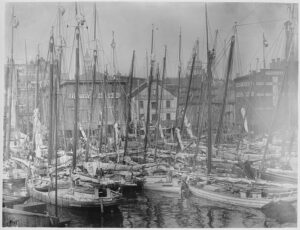

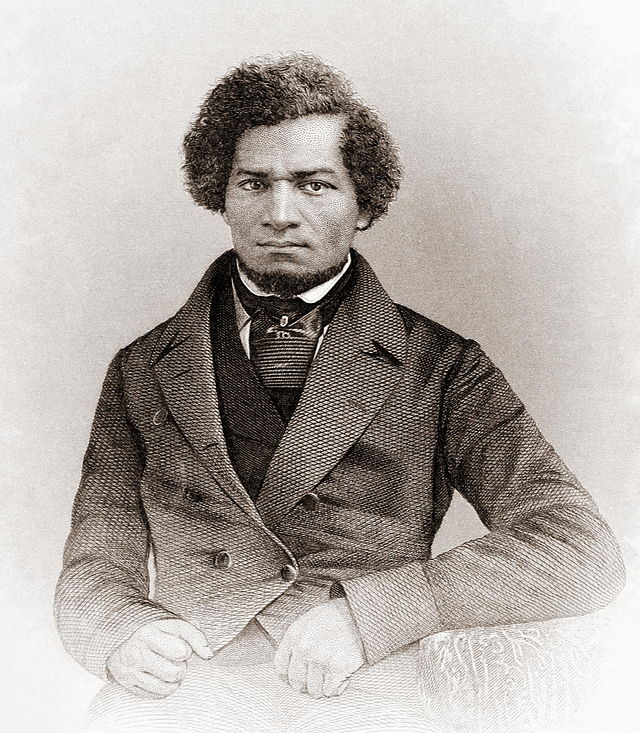
Frederick Bailey (1818-1895) is born enslaved in Talbot County. He spends his formative years on the Eastern Shore, then in Baltimore where he teaches himself to read and works in the local shipyard. He escapes by train in 1838 with the help of his future wife, Anna Murray, who sells some possessions to fund the escape. Once free he becomes Frederick Douglass.
Using all his formidable powers as a speaker and writer, he advocates for civil rights and the abolition of slavery and is the first Black public figure to reach a white audience.
He discovers the new world of photography in the 1840s and uses photographs to increase his ability to fight for all Blacks. Over 160 images have been discovered, making him the most photographed American in the 19th century.
Aside from Lincoln he is likely the most important and influential American of the 19th century.
For More Information
Frederick Douglass Museum and Cultural Center, Highland Beach
Talbot County Historical Society, Pastperfect on line
Banneker Douglass Museum, Annapolis
Cedar Hill, Frederick Douglass National Historic Site, DC
Living Classrooms Frederick Douglass Isaac Myers Maritime Park